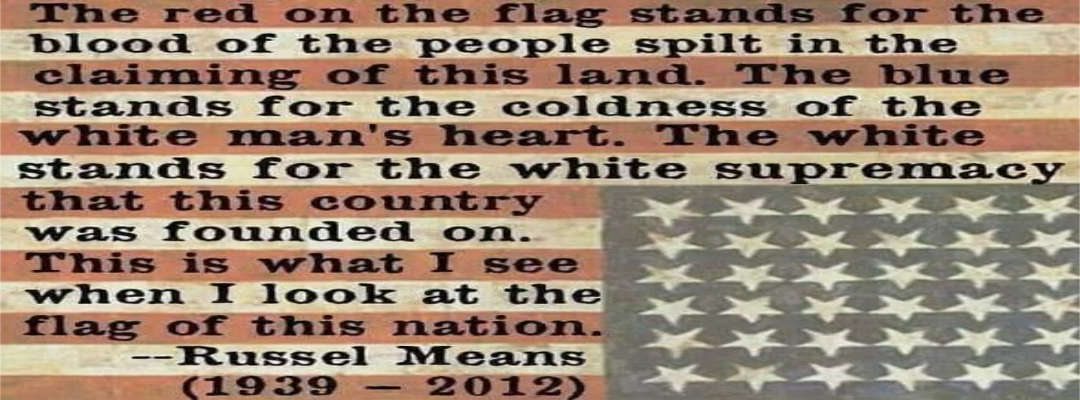
An Independence Day Perspective

I used to celebrate America's independence primarily through fireworks, parades, and the familiar traditions that accompany the Fourth of July. Then I encountered historical perspectives that challenged me to look beyond the celebration itself and examine the foundation beneath it. What I found did not diminish my appreciation for the freedoms secured through the American experiment. Rather, it expanded my understanding of the many people whose sacrifices, knowledge, and perseverance made those freedoms possible.
Independence did not emerge in a vacuum. Long before the Founding Documents were drafted, Indigenous nations governed themselves through sophisticated systems of law, diplomacy, trade, and collective responsibility. Historians continue to debate the extent of that influence, but it is difficult to ignore the similarities between certain Indigenous confederacies and some of the principles later discussed by colonial leaders. Whether direct inspiration or parallel development, the story of America becomes far more interesting when viewed as an exchange of ideas rather than a tale belonging exclusively to one culture.
What I am attempting to share is not a legal argument, nor an accusation directed at generations long gone. It is an observation rooted in cause and effect, in patterns that emerge when history is viewed as a living conversation rather than a collection of isolated events. Nations, like individuals, inherit both achievements and mistakes. Understanding one without acknowledging the other rarely produces wisdom.
Survival on this continent often depended upon cooperation. Settlers learned agricultural techniques, methods of preservation, navigation, herbal knowledge, and practical skills from those who had lived here for countless generations. The lessons did not disappear with time. Many continue to echo through modern almanacs, homesteading guides, wilderness manuals, and books that teach people how to live from the land when technology fails or is unavailable. Even principles of stewardship—showing respect toward wildlife, plants, waterways, and the ecosystems that sustain life—reflect values that Indigenous communities preserved long before they became fashionable topics in modern environmental discussions.
The story becomes even richer when examining communities that emerged through cooperation rather than conflict. One example can be found among groups sometimes referred to as "Finndians," descendants of Finnish immigrants and Native Americans whose families formed through intermarriage and shared community life. Their history serves as a reminder that cultural boundaries are often more porous than political narratives suggest. The American story is not solely one of conquest or resistance; it is also a story of exchange, adaptation, marriage, friendship, and the creation of entirely new identities born from mutual respect.
For that reason, I no longer view Independence Day as merely a celebration of a political separation from Britain. I see it as an opportunity to acknowledge everyone who contributed to the nation's survival and development. The fireworks remain. The parades remain. The celebration remains. What has changed is the lens through which I view them. Rather than honoring only the signers of documents and the victors of battles, I believe there is room to recognize the Indigenous nations, settlers, immigrants, laborers, explorers, farmers, and countless ordinary people whose combined efforts helped shape the country we inherited.
In recent months, I have found myself increasingly drawn toward projects that explore these intersections of history, culture, spirituality, and civic responsibility. Rather than continuing this series of essays for the immediate future, I will be dedicating my time to a larger undertaking that allows these ideas to be examined in greater depth. When that project is complete, it will be linked from this page for those interested in following the journey further.
Questions Worth Asking
If cultures with different languages, beliefs, and traditions found ways to cooperate in order to survive centuries ago, what prevents us from doing the same today? Have our disagreements truly become more complicated, or have we simply forgotten some of the skills that made cooperation possible?
When people speak of preserving tradition, which traditions deserve preservation? Is it possible that some of the most valuable customs are not found in monuments or government buildings, but in everyday acts of hospitality, stewardship, mutual aid, and respect for the natural world?
For those who feel disconnected from modern political parties, religious institutions, or cultural movements, is the answer necessarily to choose a side? Or might history suggest another path—one in which wanderers learn from multiple traditions, keep what proves useful, discard what proves harmful, and build bridges where others see only walls?
How many of our present conflicts are genuinely new, and how many are familiar struggles wearing modern clothing? What lessons from Indigenous nations, immigrant communities, frontier settlements, and the generations that followed might help us approach those conflicts with greater patience and less certainty that our side alone possesses the truth?
If America is at its best when diverse people contribute their strengths toward a common purpose, what would happen if we spent less time deciding who deserves credit for the nation's successes and more time learning how those successes were achieved through cooperation in the first place?